.png)
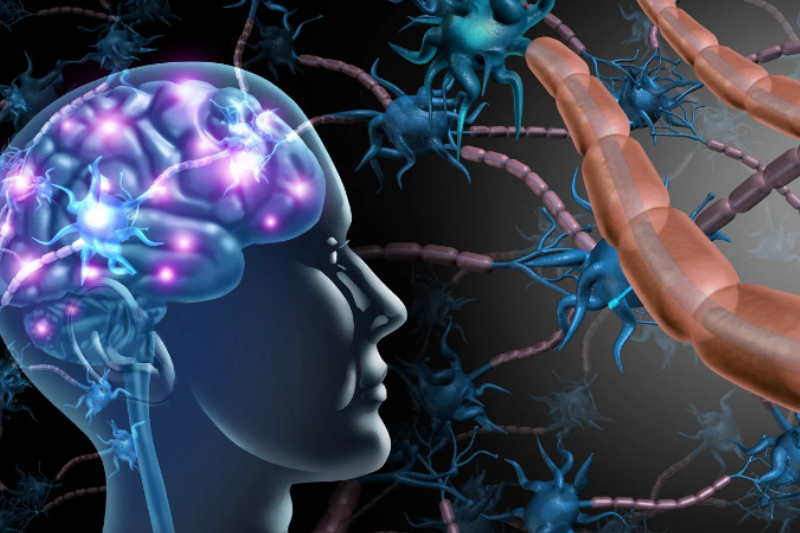
For decades, athletic performance has been measured by strength, speed, endurance, and hours in the gym. While these physical components matter, they are only part of the equation. The true driver behind every powerful movement, every split-second decision, and every clutch play is the brain. When we shift the performance conversation from muscles alone to the nervous system that controls them, we unlock an entirely new level of potential.
The nervous system is the command center of elite performance. It coordinates timing, balance, vision, reaction speed, and decision-making—often in fractions of a second. Reaction time, postural control, and cognitive speed are what separate good athletes from great ones. The athlete who “sees the play before it happens” or seems effortlessly in the right place at the right time isn’t guessing—their brain is simply processing faster and more efficiently.
This is where neuro training comes in. Neuro training is not about working harder; it’s about training smarter. It represents the future of sports performance by focusing on the brain first—enhancing how the athlete perceives, processes, and responds to the game. When the brain improves, performance follows.
What Is Neuro Training for Athletes?
Neuro training—also known as brain-based performance training—is a method of enhancing athletic ability by improving how the brain and nervous system function. Instead of only training muscles to move faster or stronger, neuro training focuses on how the brain controls movement, speed, coordination, and precision.
Every athletic movement begins in the brain. Before a muscle contracts, the brain must interpret sensory information, decide on a response, and send a signal through the nervous system. The efficiency of this process determines how quickly and accurately an athlete performs. When this communication loop is optimized, movements become faster, smoother, and more consistent.
Training the body alone improves output; training the brain improves control, timing, and adaptability. This is why athletes with superior neurological efficiency often appear calm under pressure. Faster brain processing allows for better execution when the game speeds up—whether that’s reacting to a fast pitch, adjusting mid-air, or responding to an unexpected opponent movement.
Reaction Time
When most people hear “reaction time,” they think it simply means moving fast. In reality, reaction time is a neurological process, not just a physical one. It involves how quickly the brain can see, interpret, decide, and then execute a response. Speed without clarity often leads to mistakes. True reaction time is about efficient decision-making under pressure.
A critical piece of reaction time is visual processing and anticipation. Athletes are constantly scanning their environment—tracking opponents, the ball, their teammates, and their own position in space. The brain must process all of this information instantly and determine the best response. Elite athletes don’t just react faster—they anticipate better because their brains are processing patterns more efficiently.
When brain processing is delayed, performance suffers in real time. Athletes may feel a split second “behind the play,” react late to visual cues, or hesitate during critical moments. This delay can look like missed opportunities, poor timing, or rushed decisions. Often, the body is capable—but the brain is overloaded or inefficient.
Neuro training improves reaction time by training the brain—not by forcing speed, but by refining clarity. The goal is to help the nervous system recognize meaningful information faster, eliminate unnecessary noise, and respond accurately without guessing. When reaction time improves neurologically, athletes move decisively, confidently, and with purpose.
Balance & Spatial Awareness
Balance is often misunderstood as a strength or conditioning issue, but in truth, balance is a neurological skill. It is regulated by the brain through constant communication between the vestibular system (inner ear), visual system, and proprioceptive input from muscles and joints.
The vestibular system tells the brain where the head is in space. The visual system provides environmental context. Proprioception tells the brain where the body is positioned. When these systems work together seamlessly, movement is controlled, powerful, and efficient. When they don’t, performance becomes inconsistent and injury risk increases.
Balance is the foundation for power, agility, and accuracy. Without neurological balance, strength cannot be fully expressed. Speed becomes unstable. Precision declines. Athletes may compensate unknowingly, placing extra stress on joints and soft tissues.
Poor balance doesn’t just limit performance—it slows athletes down. If the brain doesn’t feel stable, it will subconsciously restrict speed and force as a protective mechanism. This is one of the most overlooked reasons athletes plateau or struggle despite intense physical training.
Neuro training focuses on dynamic balance, not static balance. Sports happen in motion—cutting, rotating, jumping, and landing. Training balance dynamically teaches the brain to stabilize the body in real-world athletic conditions, improving confidence, control, and resilience.
Brain Speed & Processing Power
“Brain speed” in sports refers to how quickly and efficiently the brain can process information and generate an appropriate response. It’s not about thinking faster—it’s about processing smarter.
Faster brain processing improves:
- Field awareness – seeing more of the game unfold
- Timing – moving at the right moment, not just fast
- Precision – cleaner execution with less wasted motion
- Endurance under fatigue – maintaining performance late in games
This is why elite athletes often appear to “slow the game down.” Their brains are processing information so efficiently that they have more perceived time to act. While others feel rushed, elite performers feel composed.
The key to improving brain speed lies in neuroplasticity—the brain’s ability to adapt and improve through targeted, repetitive training. When the nervous system is challenged appropriately, it becomes more efficient, organized, and resilient.
Neuro training leverages this adaptability by strengthening the brain networks responsible for speed, coordination, and decision-making. Over time, athletes don’t just move faster—they move smarter, safer, and more consistently.
Introducing the BRAINS Sports Performance Program
At Brain Health D.C., neuro training for athletes is brought to life through our signature BRAINS Sports Performance Program—a comprehensive, brain-first approach designed to unlock elite performance by training the nervous system that drives it.
B.R.A.I.N.S. represents the six core neurological pillars of athletic excellence:
- B – Balance
- R – Reaction Time
- A – Accuracy
- I – Imagination
- N – eNdurance
- S – Spatial Awareness / Speed
These six components are not governed by muscles—they are regulated by the brain. Every cut, jump, swing, sprint, and split-second decision is the result of how efficiently the brain processes information and communicates with the body. When even one of these pillars is underperforming, athletes may plateau, feel inconsistent, or struggle under pressure despite strong physical conditioning.
The BRAINS program creates a complete neurological performance profile, allowing us to understand how an athlete’s brain is functioning across sensory input, processing speed, motor output, and endurance. This clarity allows training to be precise, intentional, and highly effective.
The BRAINS program is designed for:
- Youth athletes building foundational skills and confidence
- Competitive and high-level athletes seeking an edge
- Athletes returning from injury or concussion
- Professionals and weekend warriors who value longevity and resilience
When the brain is trained with intention, performance becomes more consistent, adaptable, and sustainable.
Senaptec Technology: Measuring & Training the Athletic Brain
You cannot train what you cannot measure. This is where Senaptec Sensory Performance Technology plays a critical role in neuro training for athletes.
Senaptec provides objective, data-driven insight into how the brain processes sensory information essential for sport. These assessments evaluate:
- Visual clarity
- Contrast sensitivity
- Depth perception
- Near/far quickness
- Perception span
- Multiple object tracking
- Reaction time
- Eye–hand coordination
These skills are often assumed—but rarely measured. An athlete may be strong, fast, and well-conditioned, yet still underperform because of subtle sensory or processing inefficiencies. Senaptec allows us to identify hidden performance bottlenecks that traditional training overlooks.
Objective data matters because it removes guesswork. It shows us exactly where the brain is excelling and where it needs support. From there, measurable deficits become trainable strengths through targeted neuro training protocols.
Stronger Isn’t Always Better—Smarter Is
Elite athletic performance isn’t defined by who lifts the most weight or trains the longest hours—it’s defined by how efficiently the brain runs the body. When we reframe success through the lens of neurological efficiency, a powerful truth emerges: strength without clarity plateaus, speed without control breaks down, and conditioning without brain integration leaves potential untapped.
At Brain Health D.C., we believe every athlete—regardless of age or level—has more potential than they’ve been shown how to access. Neuro training empowers athletes to unlock that potential from the inside out, building confidence, resilience, and performance that lasts far beyond a single season.
Train Smarter. Move Better. Perform at Your Highest Level.
If you’re an athlete—or a parent of one—looking to elevate performance in a smarter, safer, and more sustainable way, neuro training and the BRAINS Sports Performance Program may be the missing link. This is not about doing more—it’s about doing what matters most.
📍 Brain Health D.C.
1905 Calle Barcelona, Suite 234
Carlsbad, CA 92009
📞 Call: (858) 208-0710
📧 Email: info@brainhealthdc.com
🌐 Website: https://www.brainhealthdc.com/
