.png)
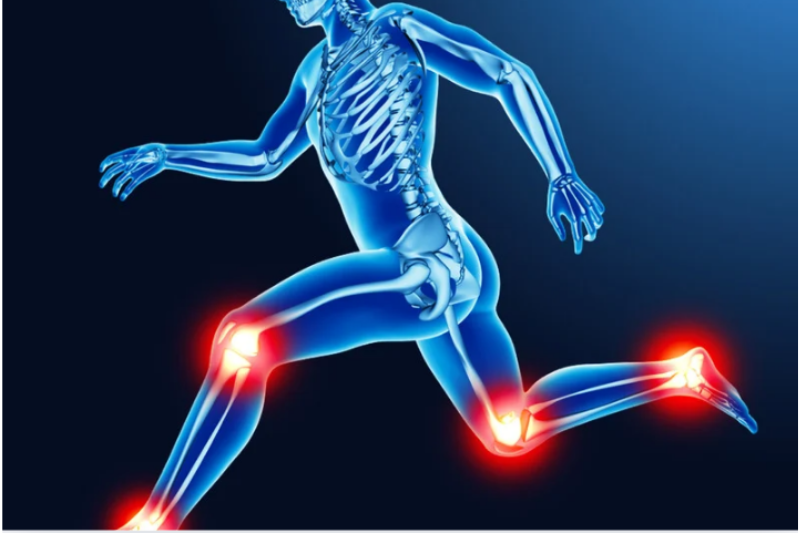
Athletes train their muscles, practice technique, build endurance, and repeat skills until movements become second nature. Yet every play begins before the body moves. The brain must first see, interpret, organize, and respond to what is happening around it. That process can influence reaction time, balance, accuracy, coordination, and spatial awareness.
At Brain Health D.C. in Carlsbad, I look at athletic performance through that brain-body connection. Our B.R.A.I.N.S. Sport Performance Program focuses on the neurological skills behind performance, using measurable technology and individualized training. One of the tools we use is the Senaptec Sensory Station, which allows us to assess important sensory and visual performance skills.
What Is the Senaptec Sensory Station?
The Senaptec Sensory Station in Carlsbad gives us an objective way to evaluate sensory performance. Instead of assuming where an athlete struggles, we can gather information about specific visual and sensory abilities.
At Brain Health D.C., Senaptec Sensory Performance Assessments can evaluate:
- Visual clarity
- Contrast sensitivity
- Depth perception
- Near/far quickness
- Perception span
- Multiple object tracking
- Reaction time
- Target capture
- Eye-hand coordination
Seeing Clearly Is Not the Same as Processing Efficiently
An athlete can have clear eyesight and still have opportunities to improve visual processing. Sports vision involves much more than reading letters on an eye chart.
Imagine a soccer player moving down the field. That athlete may simultaneously monitor the ball, teammates, defenders, boundaries, and available space. The eyes collect information, but the brain must make sense of it quickly.
That distinction is central to visual processing training for athletes. We are interested in how efficiently useful information becomes an appropriate response.
Why Sensory Processing Matters for Athletic Performance
Your nervous system continuously receives information from your body and environment. The brain processes that input and helps coordinate an appropriate response.
Functional neurology looks closely at this communication. At Brain Health D.C., we assess how the brain, nervous system, and body work together. We also recognize neuroplasticity, the brain's ability to change through specific and repetitive activity.
For an athlete, efficient processing can influence abilities such as:
- Recognizing movement around you
- Maintaining balance while changing direction
- Tracking moving objects
- Coordinating the eyes and hands
- Judging position and distance
- Responding to changing situations
- Maintaining accuracy during complex tasks
This is one reason brain training for sports performance deserves a place in the larger athletic conversation. Strength and conditioning matter tremendously, but they are not the entire performance picture.
The B.R.A.I.N.S. Behind Athletic Performance
Our B.R.A.I.N.S. Sport Performance Program was built around six important components: Balance, Reaction time, Accuracy, Imagination, eNdurance, and Spatial awareness/Speed.
Think about your favorite athlete. What looks like an extraordinary physical play often involves rapid processing before the movement happens.
A basketball player anticipates a defender. A tennis player reads the incoming ball. A quarterback scans movement before choosing a target. A soccer player recognizes open space before anyone else gets there.
The physical response matters, but so does the information that guided it.
Reaction Time Training Is More Than Moving Faster
Parents and athletes often ask how to improve reaction time in athletes. One helpful starting point is understanding what reaction time actually involves.
A response can be viewed as a sequence:
- Detect the relevant stimulus.
- Process what that information means.
- Choose an appropriate response.
- Coordinate and execute the movement.
A delay or inefficiency anywhere within that sequence may affect the final response. Simply telling an athlete to "react faster" does not identify which part deserves attention.
That is where reaction time training becomes more specific. Testing can provide measurable information about how an athlete responds to sensory demands.
Reaction Time Looks Different in Every Sport
There is no single athletic reaction. The nervous system must solve different problems depending on the sport.
A baseball or softball player may have only moments to recognize and respond to a pitch. A soccer player must monitor movement across a much larger environment. Basketball requires rapid shifts between teammates, defenders, the ball, and the basket.
Tennis and pickleball present another challenge. Athletes repeatedly judge speed, direction, distance, and positioning while preparing their next movement.
Good sensory training should respect those differences. Training should fit the athlete rather than forcing every athlete through the same program.
Visual Processing Skills That Can Influence the Play
Visual processing training for athletes can address several abilities involved in receiving and responding to information. Senaptec gives us a way to examine these abilities separately instead of treating "sports vision" as one general skill.
Depth Perception and Contrast Sensitivity
Depth perception helps an athlete judge distance and spatial relationships. That can matter when tracking a ball, navigating other players, or determining where an object is moving.
Contrast sensitivity involves distinguishing an object from its background. Athletic environments are rarely visually simple, especially with changing lighting, uniforms, crowds, and movement.
Near/Far Quickness and Perception Span
Many athletes repeatedly shift attention between near and distant information. Near/far quickness evaluates how efficiently those visual transitions occur.
Perception span relates to how much useful information an athlete can take in. That may become particularly relevant in sports where awareness extends beyond one target.
Multiple Object Tracking and Target Capture
Some sports require athletes to monitor several moving objects or people simultaneously. Multiple object tracking examines this type of sensory demand.
Target capture focuses on locating relevant visual information quickly. In competition, finding the right information can sometimes be as important as moving quickly.
Eye-Hand Coordination
Eye-hand coordination connects visual information with physical action. The athlete must see what is happening and organize movement in response.
This matters in obvious ways for racquet and ball sports. It can also contribute to many activities requiring precise responses to visual cues.
Measure First, Then Train With Intention
One of my core beliefs is that every nervous system is individual. Two athletes can play the same position and have completely different strengths and challenges.
That is why I value objective baseline testing. At Brain Health D.C., neurological evaluations may examine measures including reaction times, motor accuracy, postural control, and neurological endurance. Sensory performance data can add another layer to that picture.
A thoughtful process can include:
- Establishing an individual baseline
- Identifying relative strengths
- Finding areas that may benefit from focused training
- Selecting appropriate sensory exercises
- Practicing consistently
- Reassessing progress
- Refining training when needed
How Sensory Training Applies Across Different Sports
The value of sensory training for athletes becomes clearer when we look at actual sporting demands. Different sports ask the nervous system to solve different problems.
For example:
- Baseball and softball: pitch tracking, depth perception, reaction time, and eye-hand coordination
- Soccer: peripheral awareness, multiple object tracking, balance, and spatial awareness
- Basketball: target capture, reaction time, visual attention, and eye-hand coordination
- Tennis and pickleball: ball tracking, depth perception, near/far quickness, and rapid responses
- Football: visual awareness, reaction time, multiple object tracking, and spatial processing
- Golf: visual precision, coordination, balance, and consistency
Why Brain Health D.C. Looks at the Whole Athlete
The Senaptec Sensory Station is valuable, but it is not the entire program. Technology gives us information. The real value comes from understanding what that information means for the individual standing in front of us.
My approach to functional neurology recognizes that nervous systems have individual patterns. Even people with similar concerns may require different treatment or training strategies. That philosophy carries directly into athletic performance.
Depending on the athlete's needs, Brain Health D.C. may incorporate technologies and therapies such as:
- Senaptec Sensory Station Training
- BTrackS Balance
- RightEye
- FitLight
- NeuroOptimal Neurofeedback
- Motion Guidance
- Neuro Sensory Motor Integrator
- Ocular, vestibular, and balance therapy
- Rhythm and timing training
Training the Athlete You Cannot See
Some of the most important moments in sports happen before anyone in the stands notices. The athlete sees an opening, recognizes a pattern, makes a decision, and coordinates a response. By the time we see the movement, the nervous system has already been hard at work.
Athletic development does not always mean doing more repetitions or pushing the body harder. Sometimes the next opportunity for growth comes from understanding the athlete more completely. With individualized assessment and purposeful sensory training, we can explore another meaningful piece of human performance.
Discover What Your Athletic Brain Can Do
If you are an athlete, parent, or coach in Carlsbad or North County San Diego, we would love to help you learn more about the brain behind performance. At Brain Health D.C., our goal is to create a partnership built around your individual needs, measurable information, and meaningful progress.
Brain Health D.C.
1905 Calle Barcelona, Suite 234
Carlsbad, CA 92009
Phone: (858) 208-0710
Fax: (858) 239-1317
Email: infochiro@fitnessgenome.net
Explore Brain Health D.C., learn more about our services, or schedule an appointment with Dr. Nisreen.
